Forget 20-34 Year Olds and the Future Might not be so Rosey

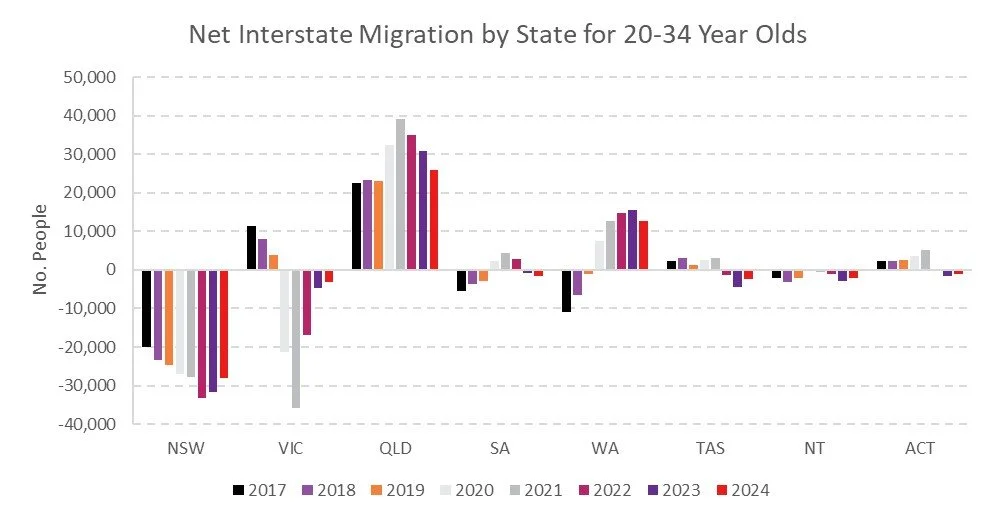
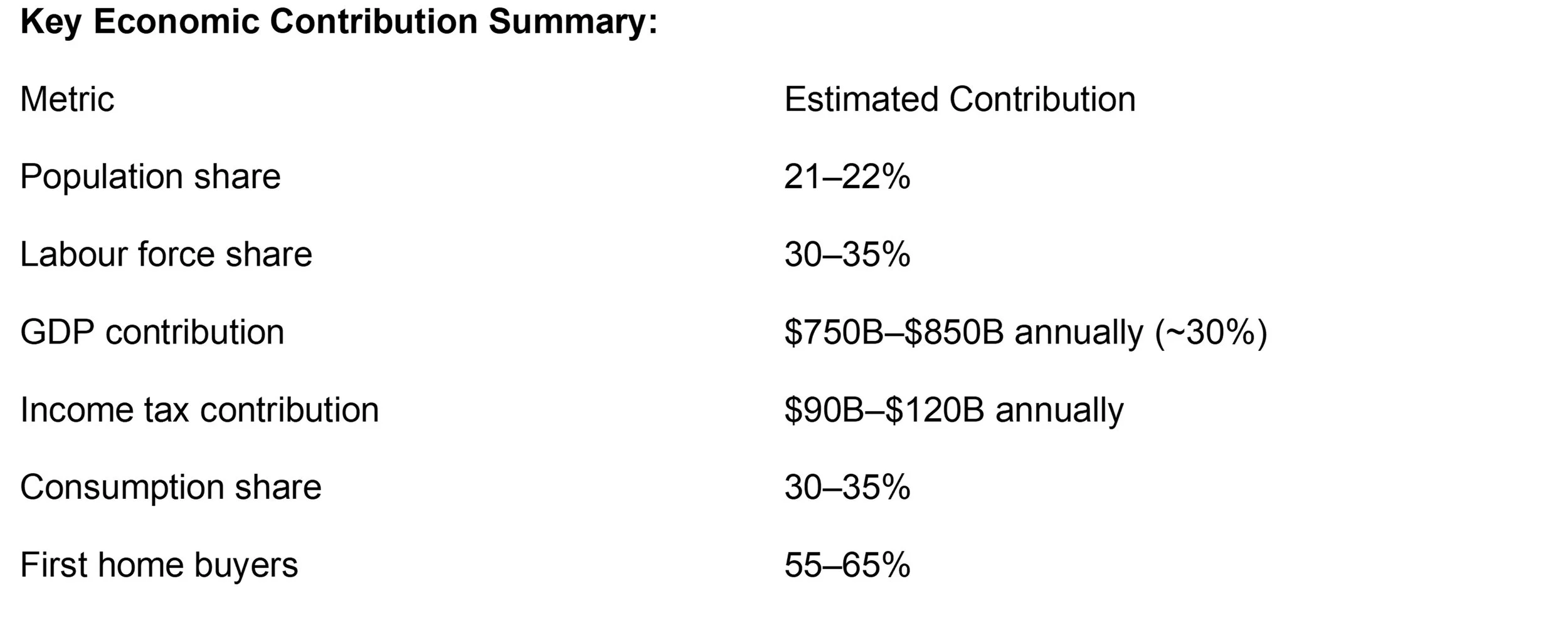
Young adults aged 20–34 represent the economic engine room of Australia. While accounting for just over one‑fifth of the population, this cohort contributes approximately one‑third of the nation’s total economic output. Their influence not only spans labour force participation, productivity growth, taxation, housing demand, and entrepreneurial activity, they are also becoming a political force in their own right with a generally left leaning bias. This newsletter explores their economic importance and why their role is central to Australia's future prosperity and why some State’s will struggle into the future as a noticeable brain drain starts to become more noticeable.
Labour Force Contribution
Australians aged 20–34 comprise approximately 30–35% of the total labour force. This reflects high participation rates and peak productivity years. Their labour directly supports business output, government revenues, and economic expansion. States like New South Wales, Victoria and South Australia will feel this more than most, however Queensland and West Australia seem unlikely to see this trend change anytime in the near future.
GDP Contribution
Given labour represents the majority of economic production, this cohort contributes an estimated $750 billion to $850 billion annually to Australia’s $2.6 trillion economy—approximately 30% of GDP. This makes them one of the most economically significant demographic groups. They are also an age group that usually have less demand on the healthcare sector and social services of the nation. Their consumption patterns are typically quite high, particularly when young families are considered, first home ownership or moving into rental properties.
Taxation and Fiscal Impact
Young adults contribute substantially to public finances through income tax, GST, and property-related taxes. Their annual tax contribution is estimated at $90 billion to $120 billion, helping fund essential public services and infrastructure. At this age, they are unlikely to experience the tax offset benefits that many older Australian’s are able to achieve simply through a lack of disposable income, limited equity and a career that is only in its infancy. This generally makes them reactive to the tax system, though also acknowledging that many grants, particularly relating to housing has been more targeted to helping this age cohort attempt to find a house to live in.
Consumption and Housing
To this point, the aforementioned cohort drives consumption across key sectors including housing, transport, retail, and technology. They represent the majority of first-home buyers and a large proportion of renters, supporting Australia's construction, banking, and property sectors. However this is also a demographic that can usually raise the capital through savings to create a deposit, however the capacity to service the requisite debt is more often than not, out of their reach.

Throughout 2026, it is anticipated that the taxation system on home ownership, Negative Gearing and Capital Gains taxes will feature more prominently in the debate around solving affordability. At a time when housing supply is needed more than ever, these will be tricky waters to navigate and continue to represent just one small piece of the broader puzzle.
Innovation and Business Formation
Entrepreneurship rates peak in the late 20s and early 30s, making this cohort central to innovation and business creation. Their adoption of new technologies and willingness to start businesses enhances productivity and long-term economic growth. The potential pivot of the Nation’s economy to a greater emphasis on Artificial Intelligence will make this highly I.T literate generation critical to helping ensure Australia doesn’t get left behind.
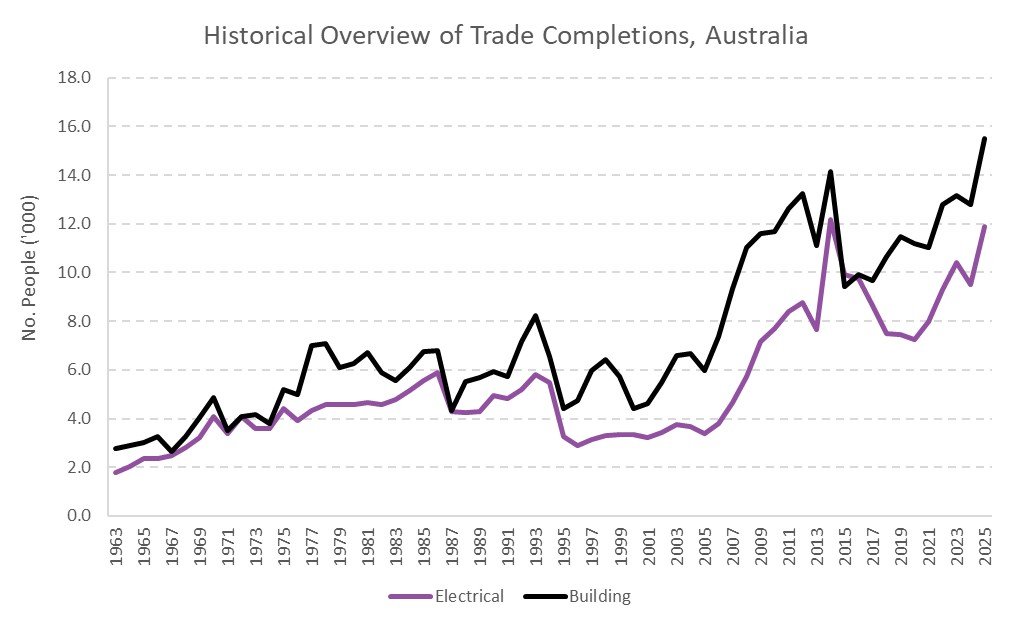
However it doesn’t need to be all about technology either. This is an age group that is highly regarded in the trade sectors coming through apprenticeships to help provide the much needed labour and technical skills in such short supply. Thankfully the current trend is that the growth in building related trade apprenticeship completions is increasing.
As Australia continues to evolve economically, the contribution of young adults aged 20–34 remains essential. Their productivity, innovation, and consumption will shape the country's economic trajectory for decades to come. Policies that support employment, housing access, and business formation for this cohort will be critical to sustaining national prosperity and likely grow the States they settle in. Whilst QLD and WA appear to be the net beneficiaries right now; the author wouldn’t be surprised if VIC turned their negative migration trend around and saw the younger population start to relocate to Greater Melbourne. This would be not only for the job opportunities that are present, culture and events; but also the significant residential price advantage when compared to Greater Brisbane and Greater Sydney.
Matthew Gross | Director | mgross@nprco.com.au
Nicholas Price | Associate Director | nprice@nprco.com.au