Who pays for an apartment's community bike room?

With the cost of construction continuing to escalate and the affordability of new apartments now starting to widen from the established housing market which is in price decline, it is worth having the discussion around cycling as a commuter based option. This is particularly important for Brisbane’s inner city suburbs. Should planners be forcing the issue in new apartment buildings in Brisbane that every project needs to facilitate a communal bike room? Few people ask how many residents use it, or what it costs everyone who doesn’t. Our latest research looked at bike storage in inner-city apartments and their inner-city neighbours. The short answer: cycling as a commuter option requiring a shared room in the basement is rarely where the money does the most good.
Cycling is a niche commute across the inner city
Census journey to work data shows how small cycling is, even in Brisbane’s best-connected suburbs and it is arguably because of these connections, and congestion that so many more efficient alternatives exist, particularly at $0.50 public transport fares. As an example, respondents for the 2021 census, just 1.3% of Newstead’s employed residents rode to work, or 68 people. Its inner-city neighbours look much the same.
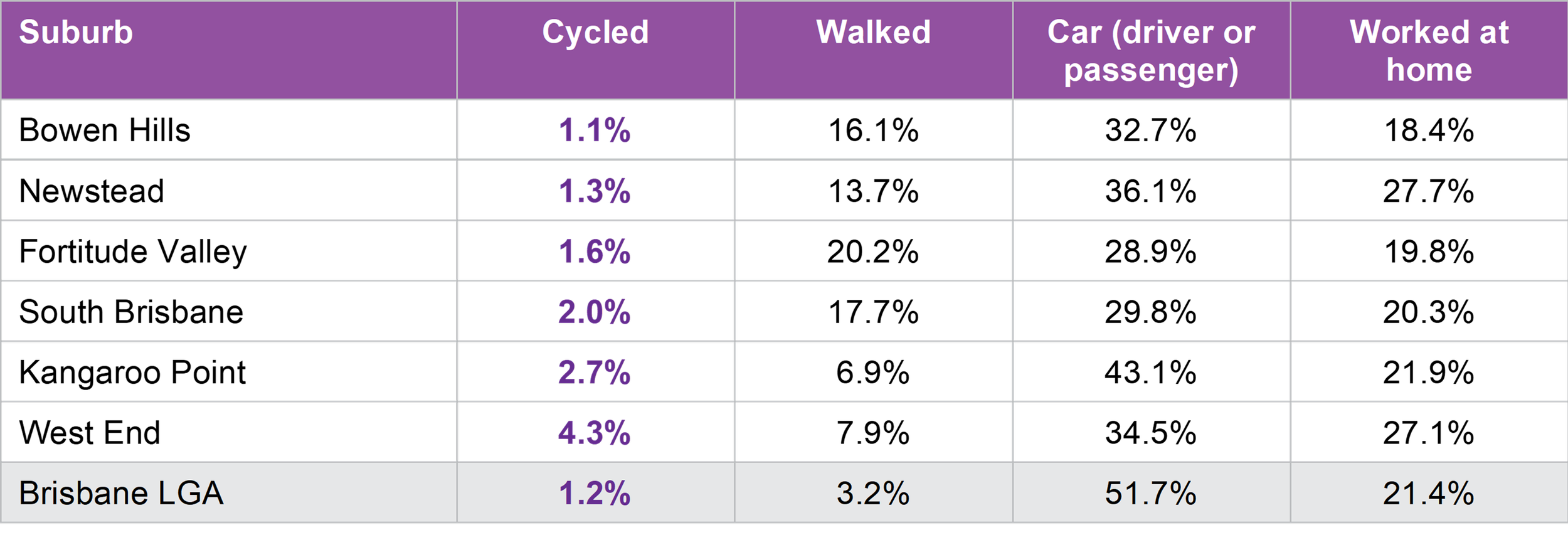
Living close to the city mainly turns commuters into walkers, not riders. The hassle of riding less than 5kms is not worth the effort when one considers the potential for a change of clothes, shower etc during the summer months. As a result, inner city walking rates run four to six times the Brisbane average, while cycling is only one to three times higher. Even West End, the strongest cycling suburb, has eight car commuters for every cyclist.
Who lives in a building matters more than where it sits. West End and Kangaroo Point are older suburbs with more owner-occupiers and families than the newer apartment precincts, and they cycle more. Newstead households average 1.7 people, about 90% have two people or fewer, and around 71% of apartments are rented. Children aged 5 to 17 comprise only about 6% of residents. Austroads data shows that families with school-aged children own the most bikes, and those families are largely missing from inner-city apartments.
Hybrid work cuts commuting further, with Roy Morgan finding 43% of Brisbane employees work from home at least some of the time. Comfort is the other barrier: the 2025 National Walking and Cycling Participation Report found 85% of women and 69% of men either don’t ride or say they would ride more if they felt more comfortable, safer. Cars and bikes need to be physically separated, a thing green line on the side of the road that often runs out is considered too risky. Importantly the congestion in the inner city roads is where this is felt most strongly.
What a bike room really costs
Bike rooms usually sit in the basement or podium, some of the most expensive floor space in the building to construct. Each bike space takes about 1.5m² before circulation. As common property, the cost is spread across every apartment: first in the purchase price, then in body corporate levies for the life of the building, whether or not the owner has a bike.
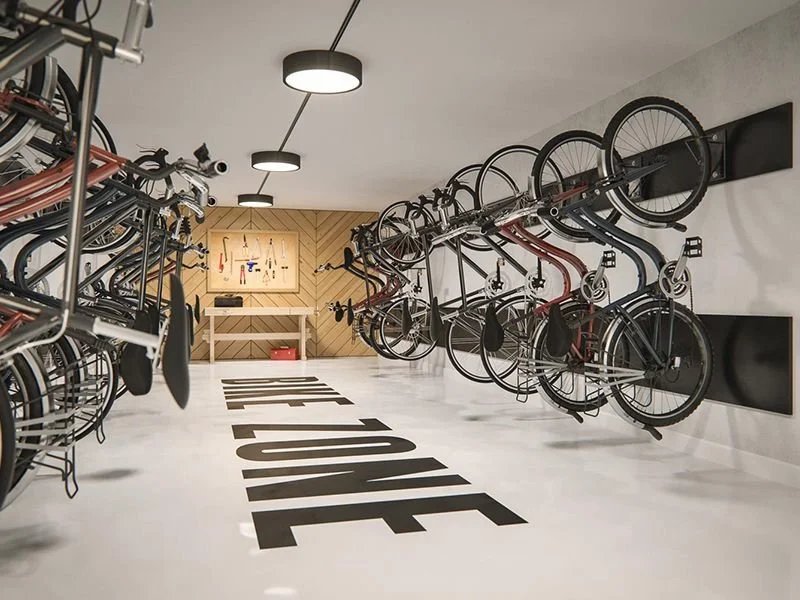
The usage doesn’t stack up. As a scenario, a 200-unit building might hold 50 bikes, yet only 10 to 15 get ridden on a given day. The rest sit for weeks or months, and abandoned bikes are common when tenants move out. E-bikes add another layer: they already account for 20% to 28% of bikes sold, and a shared room will soon need power at every rack, with the electricity bill shared by owners too.
Every dollar added to construction narrows the pool of buyers and makes it harder for projects to proceed.
Homes are not offices
Planning rules often apply office thinking to homes. An office end of trip facility is a destination. Commuters use it twice a day on 220 to 240 working days a year, the business pays for it, and predictable peaks bring plenty of passers by to deter theft.
Apartment storage is the opposite. It sits at the start of the trip, the bike stays parked most of the time, and residents foot the bill. Residents don’t need showers or change rooms either, because their own apartment does that job. Applying commuter ratios to homes overstates demand.
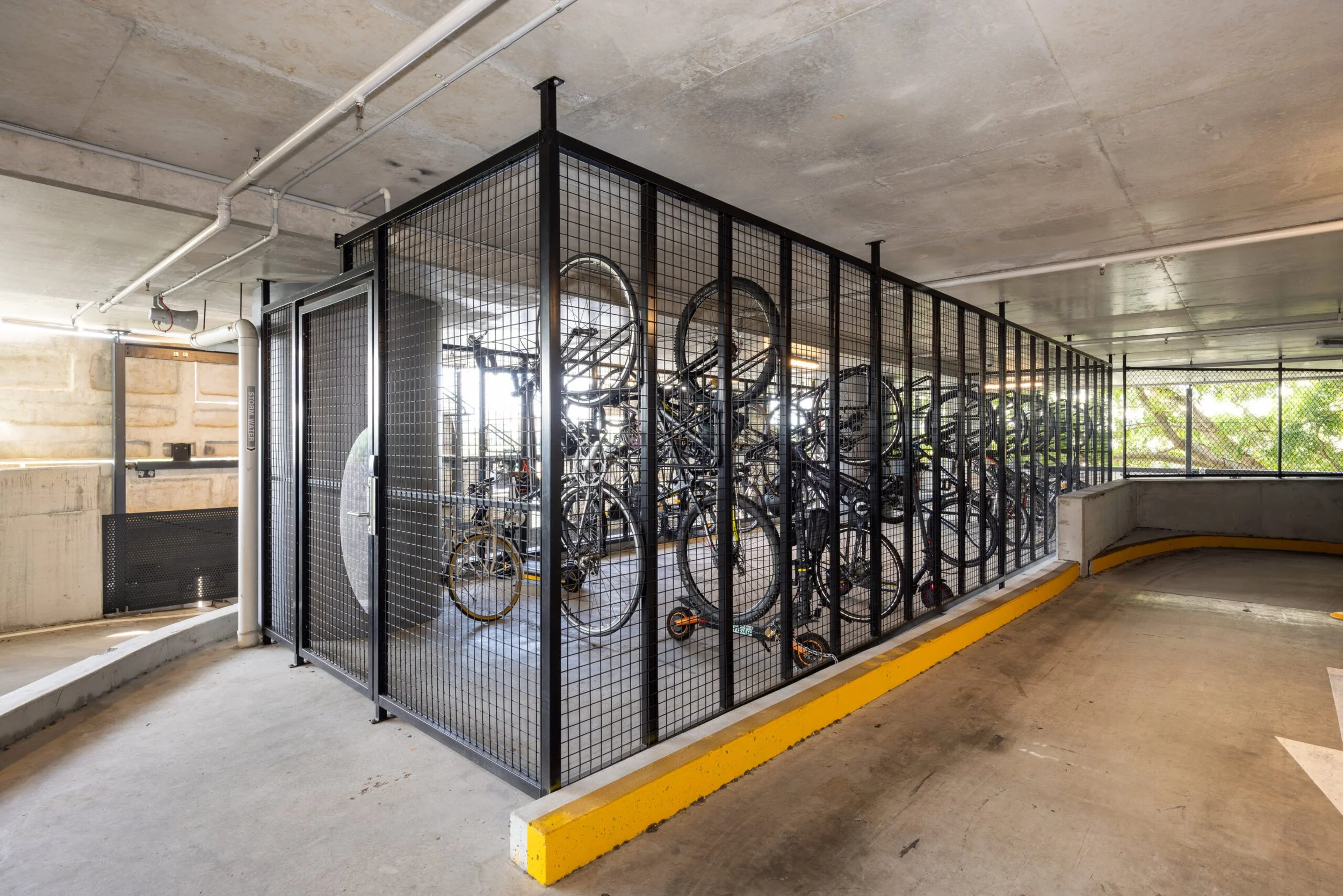
443 Queen Street
Where the cycling dollar works hardest
If the goal is more people on bikes, the money goes further where bikes actually move:
• Separated bike lanes. Riders told us they avoid peak hour because of traffic, and the national data points to comfort as the main barrier. Safe, physically separated routes are what turn would-be riders into regular ones.
• Workplace end-of-trip facilities. They sit at the destination, are used every working day, and are funded by the business that benefits.
• Flexible private storage at home. Secure, powered storage cages linked to individual apartments or car parks, sized to real demand rather than a fixed quota. They serve cyclists and non-cyclists alike, holding bikes, luggage, sports gear and chargers.
That calls for performance-based planning rules that let each building respond to who will actually live there. A mostly idle bike room doesn’t get anyone cycling, but it does add to the price of every apartment, at a time when Brisbane can least afford it…and besides, the greatest use of bikes by cyclists are actually in the suburbs. So perhaps spending on separated road and cycle paths in the “burbs” might see commuting increase. And is money was not a problem, perhaps a dedicated cycleway linking the Gold Coast to the Sunshine Coast to grow cycle tourism, but that is an article for another day.
Matthew Gross | Director | mgross@nprco.com.au
Nicholas Price | Associate Director | nprice@nprco.com.au